Pharma Commercial and Omnichannel teams already have CRM records, content libraries, campaign platforms and engagement data. The problem is that these assets often sit in separate systems and processes. Teams spend time reconciling customer records, rebuilding plans, researching relevant experts and preparing global content for US execution.
Continue reading or download the guide.
Ingemark approaches AI in pharma Commercial Operations as a set of governed workflows that connect HCP data, content and engagement decisions while keeping people responsible for review and approval. The solution may be a custom AI assistant, an integration layer across existing platforms or a combination of both.
In a Deloitte survey of more than 190 HCPs and 50 pharmaceutical executives, 82% of executives were satisfied with their customer engagement strategies, but only 28% of HCPs felt those strategies met their needs.
1. Connected HCP data makes segmentation easier to refresh
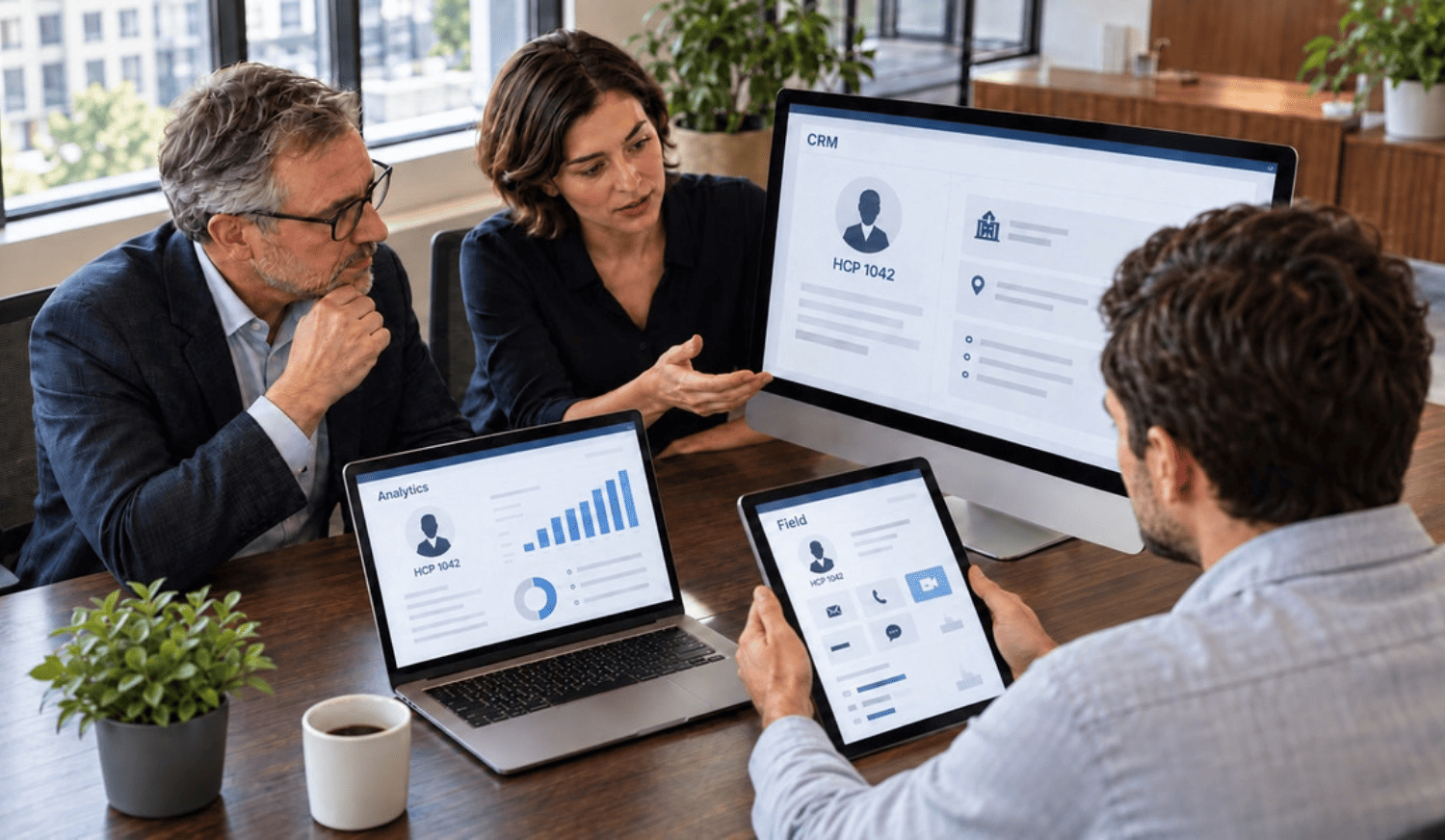
Static segments quickly lose value when HCP identities, affiliations, consent records and engagement signals are distributed across systems. Data, content and channels often remain isolated, even as their volume grows and teams pursue more coordinated HCP engagement.
Ingemark can connect permitted records across enterprise systems, resolve duplicates and establish a governed customer view before clustering. The resulting workflow can propose explainable segments, show what changed and let teams review, override or refresh them on an agreed schedule.
Astellas offers a public example of the underlying value. After harmonizing customer data across 45 countries, the time from adding a new customer and capturing consent to multichannel engagement fell from nearly five days to less than five hours. This global example is relevant to US operations, but its result should not be treated as a US benchmark.
2. Emerging scientific influence becomes more visible
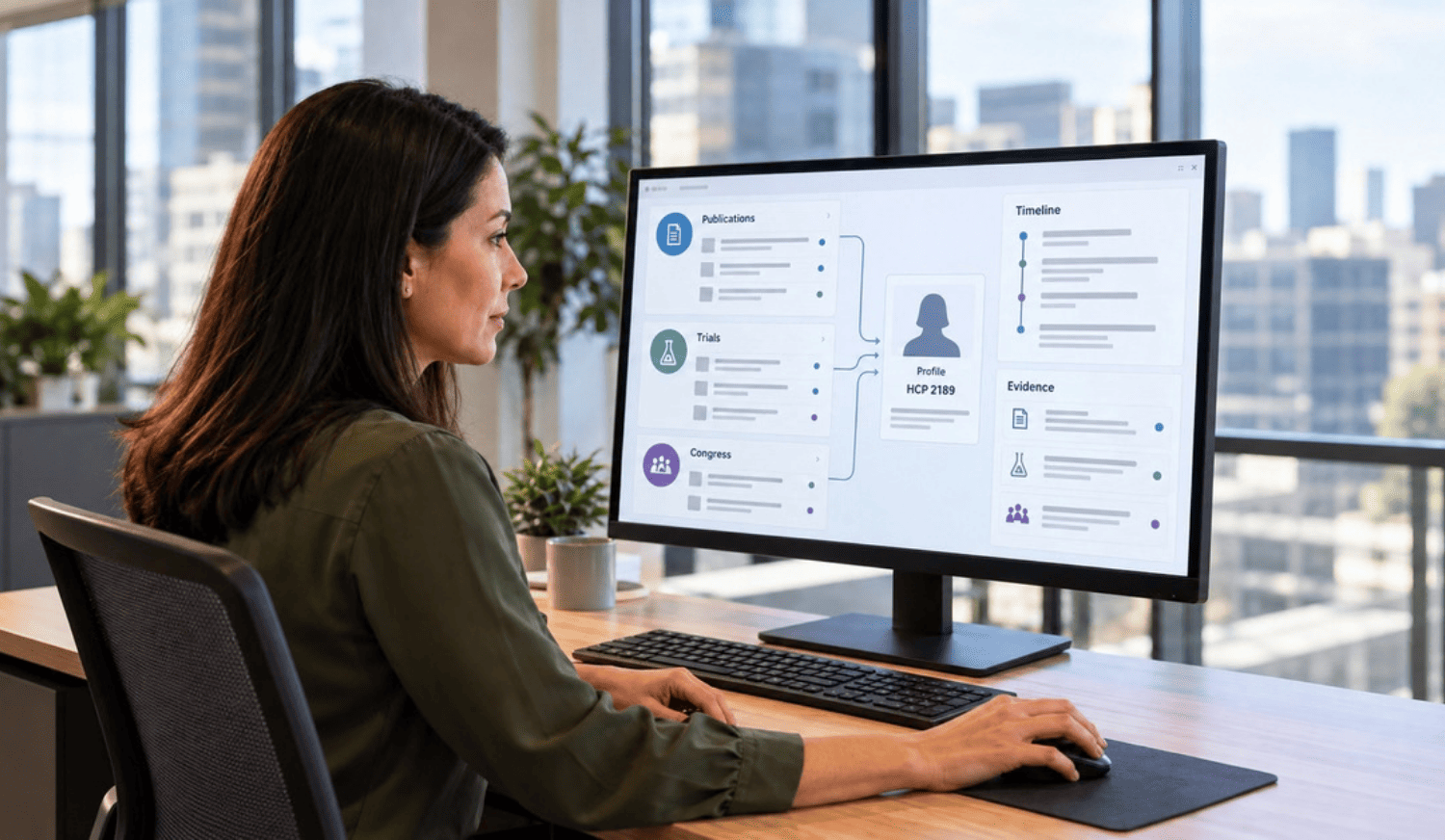
Traditional KOL research often favors experts who are already known to the organization. Manual searches can miss less established investigators whose publications, trial activity, congress participation or professional networks signal growing relevance.
A 2024 analysis of Veeva Link Key People found that 30% of the global experts identified in the dataset had no recorded interaction with MSLs. That does not prove that every uncontacted expert should be engaged. It shows why relying only on existing relationships can leave gaps.
Ingemark can build a system that surfaces permitted and governed signals, shows the supporting evidence and tracks change over time. Commercial and Omnichannel teams gain a stronger basis for market prioritization, engagement planning and channel strategy. Medical Affairs remains the independent validation layer for scientific relevance and whether engagement is appropriate.
3. Campaign planning becomes a reusable workflow
Campaign planning often requires teams to translate segment definitions, content availability, channel rules and regional priorities into a usable plan by hand. Ingemark can build a planning assistant that turns approved inputs into a structured starting point teams can review, adapt and reuse.
Consider a national cardiology campaign. An AI assistant could draft a plan for Northeast, Midwest and Western regions, recommend available content and channels, and identify where a regional decision is still required. Commercial and Omnichannel teams retain control of the objective, audience, rules and final plan.
4. Global content can reach US teams with less rework
Content demand keeps growing. One US biopharma benchmark found that content creation was 29% higher in 2023 than in the previous year. Days in review fell by more than 25%, yet still averaged 16 days.
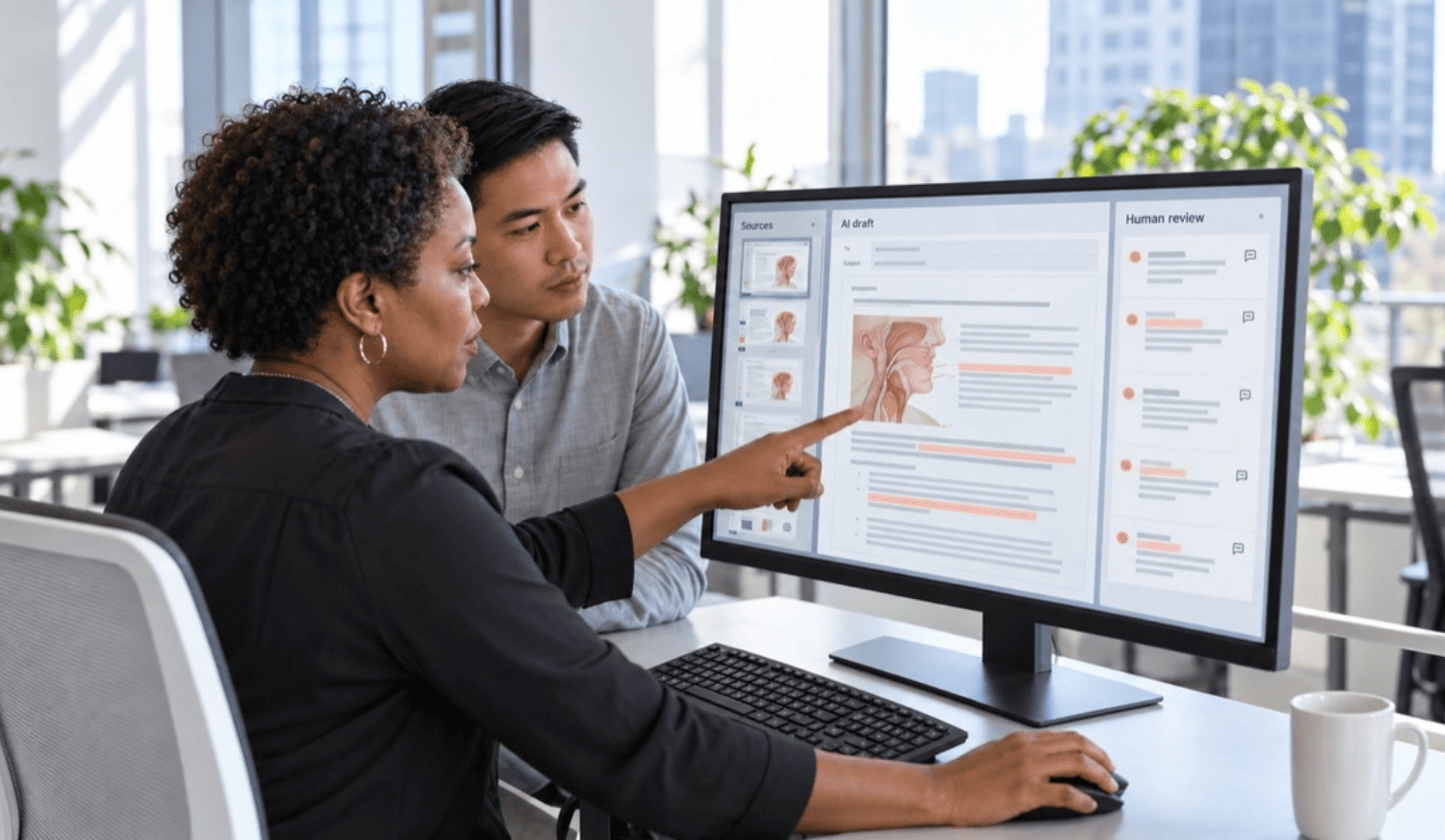
Ingemark can build an AI assistant that prepares a US draft from an approved global asset, applies approved templates and terminology rules, flags unsupported or unresolved items and produces a change log for reviewers. For promotional communications, the workflow can help teams check claims, supporting evidence, risk presentation and consistency with FDA-required labeling.
The AI assistant reduces repetitive preparation. Medical, Legal and Regulatory reviewers still decide what is acceptable and approve the final material.
5. HCP journeys use engagement signals more deliberately
Personalized journeys add another layer: engagement history must be interpreted without presenting an inference as fact. An Ingemark-built AI assistant could use permitted email, webinar, content and field-interaction signals to recommend the next approved step, relevant content and timing. The recommendation might be a follow-up, a representative conversation, later contact or no communication.
Teams review the recommendations before execution. Any potential scientific interaction is routed to Medical Affairs for independent assessment.
How Ingemark can turn a use case into a working solution
Each solution starts with the current technology stack and the decision the team needs to improve. Where existing platforms already support it, Ingemark can configure or extend them. Where company-specific logic crosses systems, we can build the missing workflow, connect it to existing tools and remain responsible through implementation and ongoing improvement.
What makes these workflows usable in pharma?
A useful solution needs more than a model. It needs:
- approved and permitted data, rules and content;
- clear ownership of business decisions and scientific judgment;
- a visible distinction between source evidence and AI inference;
- version history, rationale and reviewer changes; and
- human approval before activation.
The default principle should be simple: recommend first, activate later. This makes it possible to compare the AI assistant’s output with the current process before changing live HCP engagement.
Choose the workflow worth testing first
Our US Commercial and Omnichannel AI use-case guide explains five connected workflows in more detail: refreshable HCP segmentation, emerging KOL identification, HCP campaign planning, global-to-local content adaptation and journey personalization. Each use case sets out the required inputs, workflow, human checks, success measures and main dependencies.
Download the US use-case guide to identify the best starting point for your team.
Prefer to talk through a specific workflow first? Contact our team.
Sources
- Deloitte, Unlocking the Future of Customer Engagement in Pharma
- IQVIA, Step-by-Step Omnichannel Deployment Strategy in Life Sciences
- Veeva Systems, Navigating Customer Data Fragmentation in Biopharma
- Veeva Systems, Four Pillars of Data-Driven KOL Engagement
- Veeva Systems, Higher Content Volumes Make Benchmarking Vital
- US Food and Drug Administration, Medical Product Communications That Are Consistent With the FDA-Required Labeling – Questions and Answers